
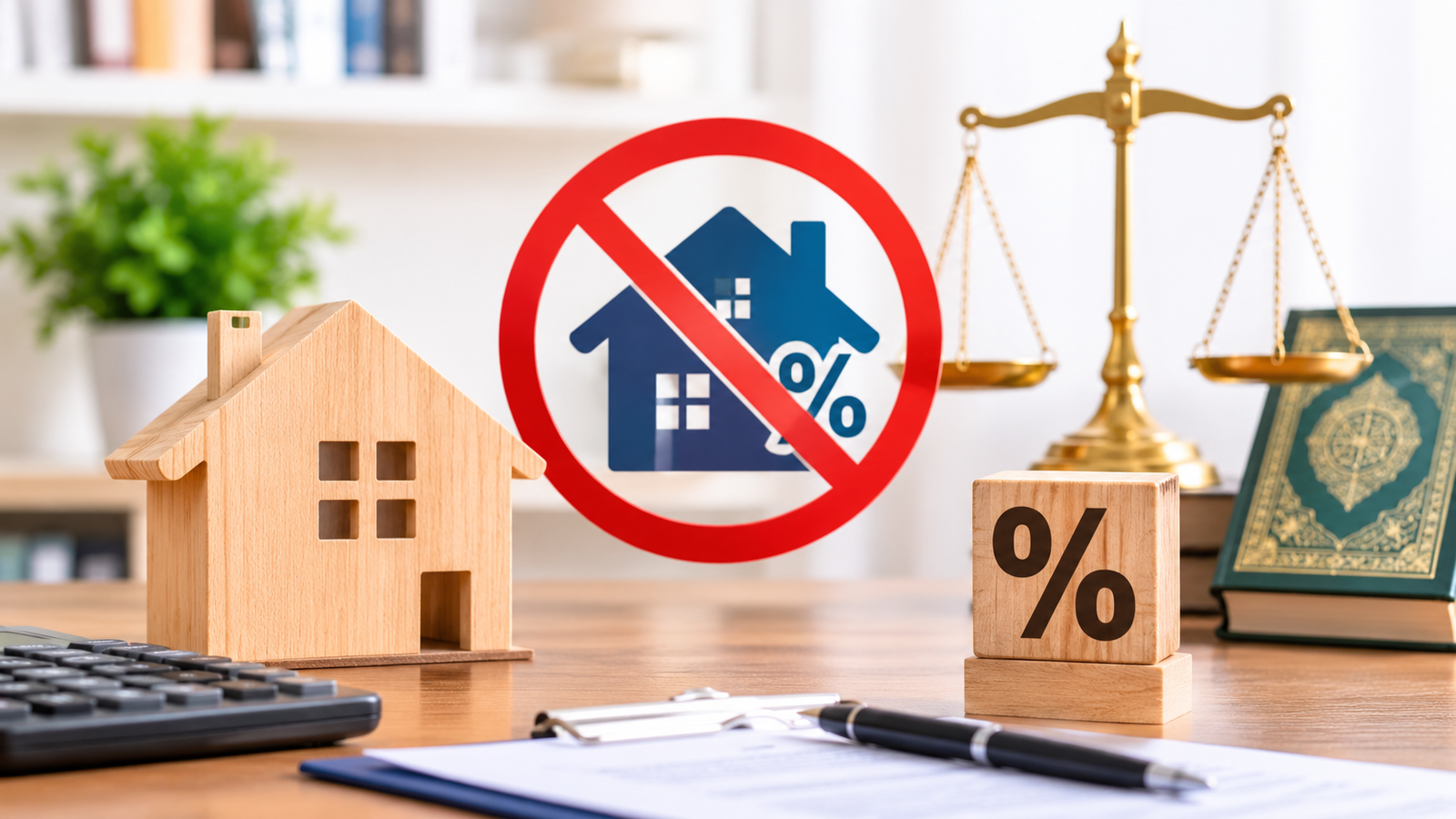
Many Muslim families ask whether a regular home loan is allowed. The short answer: most scholars say a conventional mortgage haram ruling applies because the loan charges interest.
But scholars do not all agree on every case. Some councils have allowed a bank loan under real need.
This guide lays out the main views fairly, with sources. It does not issue a ruling. That belongs to you and your own scholar.
So, is a conventional mortgage haram?
Most contemporary scholars say a conventional mortgage is not permitted because it charges interest, which Islam treats as riba. A minority view allows it under real need when no halal option exists. So the mortgage haram answer is not unanimous. Many scholars hold that the exception is weaker in places like Virginia, where halal home financing is available.
The majority view is simple. A bank lends money and charges interest on the balance. That interest is riba, so the contract is not allowed.
The minority view rests on need. It asks whether a family can live without owning a home, and whether a halal option truly exists.
Both views come from respected scholars. So whether a mortgage haram ruling applies to you deserves a real talk with your imam.
Why do scholars treat interest as riba?
Islamic law forbids earning money from lending money. The Quran contrasts trade, which it permits, with riba, which it forbids, in Surah Al Baqarah, verse 275. A conventional mortgage is a loan of money repaid with interest. For most scholars, that places it inside the prohibition.
You can read the verse and its translations at Quran.com, Surah 2, verse 275.
Trade is different because the seller takes on real risk with a real asset. That is the idea behind halal home contracts. The provider buys, leases, or shares a home and earns from the property.
Which view allows a mortgage under need?
In 1999, the European Council for Fatwa and Research ruled on Muslims in Europe without a home. It allowed them to buy one with a mortgage. It based the ruling on need, since renting was costly and halal options were scarce. The ruling had conditions, and many scholars later debated it.
The European Council’s 1999 fatwa remains the best-known case for the minority view. Its supporters stress hardship, family stability, and the lack of alternatives at the time.
Critics argue that the conditions rarely hold where halal providers operate. They also argue that renting is a lawful choice, so the need is not absolute.
What do US scholars say?
US views differ too. A 2009 ruling from the Assembly of Muslim Jurists of America treats the mortgage haram question plainly. It calls a conventional mortgage forbidden riba. In 2014, the same group called homeownership a general need for Muslims in America. It then reviewed US halal providers and grouped them by how well their contracts comply.
You can read the 2009 AMJA fatwa and the 2014 resolution on home financing companies in full.
The 2014 review matters for buyers. It found some providers broadly compliant, others acceptable only in need, and some not acceptable. So choosing halal home financing still calls for care.
Other scholars and councils in North America hold their own positions. Your local imam can tell you which view your community follows.
What if you already have a conventional mortgage?
Scholars differ here as well. Many suggest moving to a halal contract when you reasonably can, rather than selling the family home. Others advise paying the loan down faster. Speak with your scholar first. Then review the practical options with someone who knows the numbers.
A halal refinance pays off the bank loan and starts a new halal contract. It needs enough equity and comes with closing costs.
Selling and buying again with halal financing is another path. It makes most sense if you already planned to move.
Practical options in Northern Virginia
- Buy with halal financing. Several licensed providers serve Virginia buyers.
- Refinance an existing bank loan into a halal contract.
- Pay cash, alone or with family, if you have the means.
- Rent while you save, then buy with a larger down payment.
Each path has costs. Our guide on how to buy a house without interest compares them with real Virginia numbers.
One family’s decision
The family below is an example, not a real client.
A couple in Stafford has been renting for six years. A bank offers them a loan quickly, and the payment is close to their rent.
They talk with their imam, who follows the majority view. He encourages them to look at halal home financing first.
They compare two halal providers and a bank. The halal payment is slightly higher, but they choose it for peace of mind.
How Tanveer helps
Tanveer Zafar is a real estate agent, not a scholar. He does not answer the mortgage haram question for you. He helps families act on the choice they make with their own scholar.
He works with halal providers and conventional lenders alike. He plans the offer, the timeline, and the closing around the path you pick.
Looking for a halal-friendly Realtor near me in Woodbridge? Visit his halal financing page or book a call.
Start your home search
Search homes for sale across Northern Virginia below.
Search homes for sale
Live MLS listings across Northern Virginia
About the author
Tanveer Zafar is a real estate agent with Samson Properties in Woodbridge, Virginia. He has more than 20 years in Northern Virginia real estate. He holds the CRS, GRI, ABR, SFR, e-PR, O, and CPRES designations. He speaks Urdu, English, Punjabi, and Hindi. He has helped Pakistani and South Asian families buy homes since 2004. He serves buyers and sellers across Fairfax, Prince William, Stafford,d and Spotsylvania counties and Manassas.
Ready to find your first multifamily? Let’s talk.
Multifamily homes can turn your first purchase into a long-term investment. Tanveer can help you find one that works.
Frequently asked questions
Is a mortgage haram if there is no halal option?
That is exactly where scholars disagree. The European Council for Fatwa and Research allowed it in 1999 for Muslims in Europe in need. Many other scholars do not accept that exception, especially where halal providers operate. Virginia buyers have halal options, so most scholars would point you to those first.
Is halal home financing really different from a mortgage?
Its supporters say yes, because the provider earns from a real asset through a sale, lease, or partnership. Critics say the pricing looks too similar to interest. Scholarly bodies have reviewed providers and reached different conclusions. Read the contract, see who approved it, and discuss it with your scholar.
Do I have to sell my house if I have a bank loan?
Most scholars do not require selling the family home. Many encourage moving to a halal contract when you reasonably can, through a refinance or a future purchase. Your situation matters, including your equity and your family’s needs. Talk it through with your own scholar.
Is paying a mortgage haram for a rental property?
Scholars who allow a mortgage under need usually limit it to a family home. Investment properties rarely meet that need test. Many scholars therefore see a conventional loan for a rental as harder to justify. Ask your scholar, and consider halal investment financing or cash instead.
Can I ask a scholar online instead of locally?
You can, and many respected bodies publish rulings online. A local imam knows your community and can ask follow-up questions about your situation. Many families do both: they read published rulings, then confirm the decision with someone who knows them.