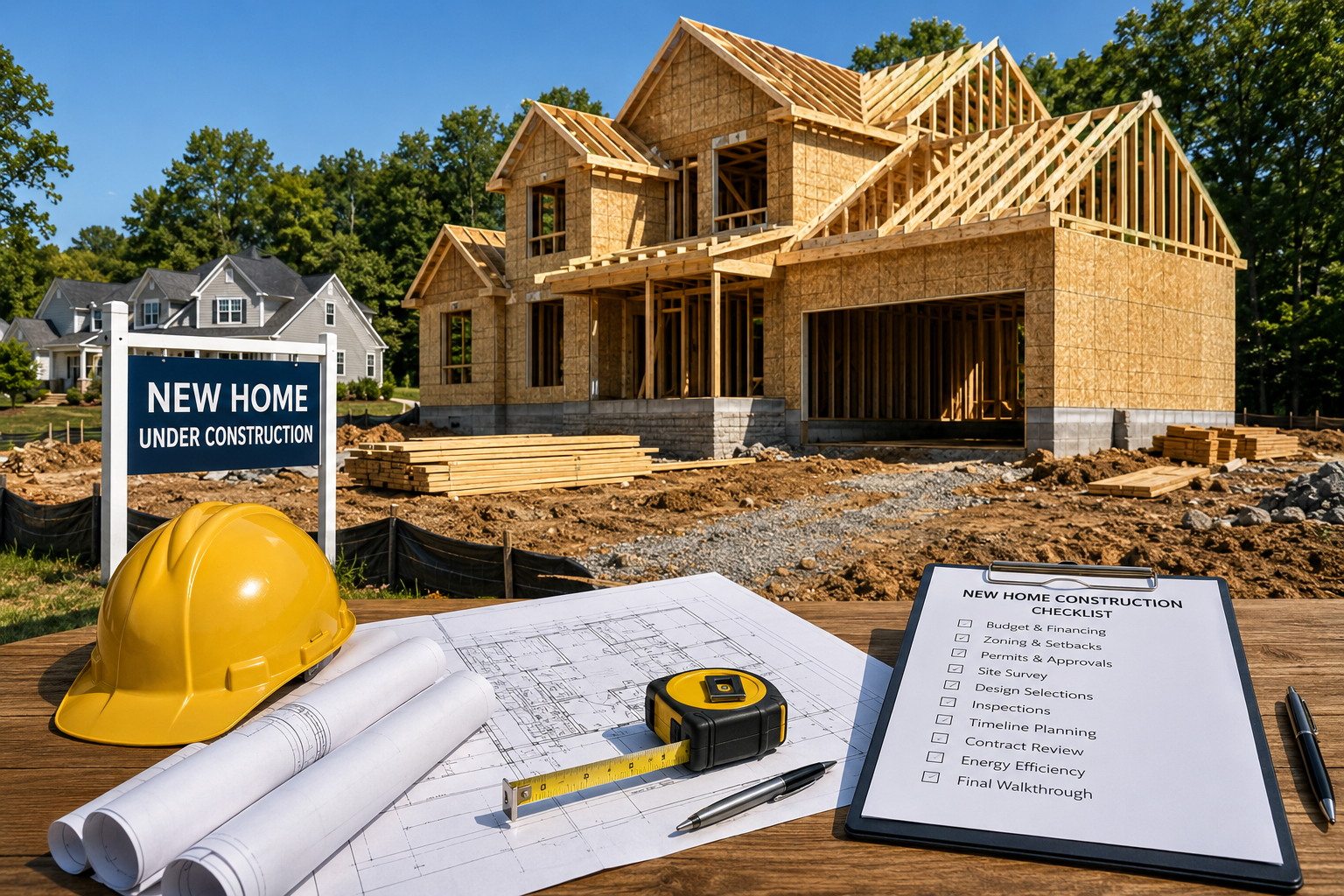
Are you dreaming of opening the front door to a custom house made just for your family? Building a home in Northern Virginia brings pure excitement, but local building codes, land prep and rising prices quickly add stress. Many buyers step into this process completely blind to how local counties run things. Fairfax, Loudoun, and Prince William counties enforce strict construction rules.
Over the last fifteen years, our Northern Virginia real estate experts have helped dozens of buyers navigate regional real estate moves smoothly. You need clear strategies before signing builder contracts or breaking ground. This honest guide breaks down 12 tips for new home construction in Northern Virginia to protect your wallet and keep your timeline moving.
Building expenses in Northern Virginia easily outpace national averages. Labor shortages and county permit fees stack up faster than expected.
Never set your total budget to match the initial builder quote. Unexpected costs hit every project during digging and framing phases. To be honest, we always tell clients to keep a 15% cash buffer ready for surprises.
Watch out for these common extra costs:
Site work overruns and county permit fees cause added expenditures, but supply chain issues can affect the project cost mid-build. Setting cash aside is the surest way to ensure a flexible construction budget.
Before buying any empty lot, read local zoning rules carefully. Every county in Northern Virginia sets firm limits on what you can construct.
Fairfax and Loudoun counties limit how close your building can stand to property lines. These designated boundaries are called setbacks. Counties also cap the percentage of land covered by structures.
Check these critical land rules early:
Checking these details prevents you from buying land that cannot legally fit your floor plan.
Government plan reviews take considerable time in Northern Virginia. Never assume workers will pour concrete the week after you finish architectural drawings.
Fairfax County permit approvals often take 8 to 12 weeks. Loudoun County reviews usually need 6 to 10 weeks. Single missing documents send your file straight back to the bottom of the pile.
Avoid long construction delays with these simple steps:
Staying patient during county reviews saves real headaches later.
Plenty of families wander into model home sales centers without representation. Remember that the builder’s sales representative works exclusively for the builder’s bottom line.
Bringing your own agent provides strong protection during price negotiations. Your representative looks out for your money through every phase of construction.
Your personal agent protects you by:
Best of all, builders cover agent commissions out of their existing marketing budgets.
Never close on land without getting an updated professional survey. Old property markers hidden in brush often miss true lines by several feet.
Topographic maps show exact ground height changes across your lot. Sloped dirt needs expensive concrete retaining walls and deeper foundation pours.
A fresh survey reveals hidden lot issues like:
Spending money on an early survey prevents massive foundation costs during construction.
Do not count entirely on county inspectors to catch mistakes. Official inspectors spend just a few minutes checking basic safety codes before rushing to the next job site.
Hire an independent private home inspector to inspect work at major construction milestones. This step maintains strict quality standards from foundation to final paint.
Schedule independent property inspections during three primary phases:
Catching errors before drywall is mounted saves a lot on repairs in the future.
Changing your mind mid-build drags out schedules faster than rainy weather. Swapping kitchen tile or moving bathroom walls late produces expensive change order fees.
Custom kitchen cabinets take 8 to 12 weeks to arrive in Northern Virginia. Ordering cabinet packages late leaves crews sitting idle on job sites.
Smart planning habits to adopt:
Locking in choices early keeps work moving on schedule.
Communities throughout Reston, Ashburn and Gainesville enforce strict HOA bylaws. HOA review boards function completely separate from county government zoning offices.
Architectural boards control what siding colors, roof materials and fence styles you use. They can reject your exterior design even after county officials stamp your permits.
Common HOA rules restrict:
Always get written HOA approval before submitting final construction blueprints to county offices.
You can easily replace laminate counters years later. Upgrading core structural systems becomes nearly impossible after crews seal up interior walls.
Invest your money into high-grade insulation and efficient HVAC units during framing. Northern Virginia brings hot, sticky summers alongside freezing winters.
Structural choices worth prioritizing:
These structural investments drop monthly utility bills for decades.
Financing new construction works differently than buying a resale home. You will need a specialized construction-to-permanent loan or builder deposit contract.
When building custom, banks release loan money through structured draw schedules. Lenders issue funds only after bank inspectors verify completed work phases.
Essential financial facts to know:
Clear loan terms keep subcontractors paid on time so work never stops.
Pretty floor plans must fit your daily family life. Think about how your family moves through rooms before signing off on final blueprints.
Picture carrying heavy grocery bags through the garage on cold winter evenings. Map out traffic flows from back entryways to kitchen counters.
Smart storage additions to request:
Designing storage around daily routines stops household clutter before it starts.
Never sign final closing forms or hand over final payments until the builder completes every item. Take your time during the final walkthrough inspection.
Carry painter’s tape to mark tiny scratches on walls, doors, or cabinet trim. Turn on every appliance, lock every door and run every faucet yourself.
Check these details carefully during walkthroughs:
A thorough punch list forces your builder to fix minor flaws before you unpack boxes.
Managing local real estate moves and builder talks requires expert support. The local real estate team at Tanveerz brings extensive knowledge across Northern Virginia. We assist buyers with evaluating lots, checking builder records and negotiating custom options. Our team knows county zoning regulations, permitting timelines and local market trends to safeguard your money.
We represent your interests from initial builder contracts all the way to final key handoffs. Clients depend on our honest guidance, quick answers and proven results. Call us at 703-400-8451 or visit Tanveerz today to start your home journey!
Building a custom home in Northern Virginia lets you craft the ideal space for your family. Success comes down to setting realistic budgets, ordering surveys and choosing experienced local guides. Double-check county zoning limits early to avoid design changes later. Apply these 12 tips for new home construction in Northern Virginia to keep your build moving smoothly.
Ready to find land or view new home communities? Reach out to us for personal guidance!
1. What are the most important tips for new home construction in Northern Virginia?
Key tips for new home construction in Northern Virginia include setting a 15% contingency budget, researching county zoning and setback rules, locking in design selections early, and hiring independent inspectors and a buyer’s agent. Following these steps helps protect your budget and keep the timeline on track.
2. How much does it cost to build a home in Northern Virginia?
Building costs in Northern Virginia typically run higher than the national average due to labor shortages, county permit fees, and site work like tree clearing or rock excavation. It’s important to keep a 15-20% cash buffer beyond the builder’s initial quote to cover unexpected expenses.
3. What should you not forget when building a new home?
Don’t forget to review county zoning and setback rules, order a boundary and topographic survey, and check HOA guidelines before finalizing your blueprints. Locking in design selections like cabinets and tile early also prevents costly delays once construction begins.
4. Is $200,000 enough to build a house in Northern Virginia?
In most cases, $200,000 is not enough to build a custom home in Northern Virginia, given the region’s high labor costs, county permit fees, and land prices. Actual costs depend heavily on lot size, location, and finishes, so getting a detailed builder quote early is essential.
5. How long does new home construction take in Northern Virginia?
New home construction in Northern Virginia typically takes 10 to 18 months, including 3 to 6 months for permitting and 7 to 12 months for active building. Counties like Fairfax and Loudoun often require 6 to 12 weeks just for permit approval.
6. Do I need a real estate agent when buying new construction in Virginia?
Yes, hiring an independent buyer’s agent is one of the most important tips for new home construction in Northern Virginia. The builder’s sales representative works for the builder, while your own agent negotiates credits, reviews contracts, and protects your financial interests.
Are you dreaming of opening the front door to a custom house made just for your family? Building a home in Northern Virginia brings pure excitement, but local building codes, land prep and rising prices quickly add stress. Many buyers step into this process completely blind to how local counties run things. Fairfax, Loudoun, and Prince William counties enforce strict construction rules.
Over the last fifteen years, our Northern Virginia real estate experts have helped dozens of buyers navigate regional real estate moves smoothly. You need clear strategies before signing builder contracts or breaking ground. This honest guide breaks down 12 tips for new home construction in Northern Virginia to protect your wallet and keep your timeline moving.
Building expenses in Northern Virginia easily outpace national averages. Labor shortages and county permit fees stack up faster than expected.
Never set your total budget to match the initial builder quote. Unexpected costs hit every project during digging and framing phases. To be honest, we always tell clients to keep a 15% cash buffer ready for surprises.
Watch out for these common extra costs:
Site work overruns and county permit fees cause added expenditures, but supply chain issues can affect the project cost mid-build. Setting cash aside is the surest way to ensure a flexible construction budget.
Before buying any empty lot, read local zoning rules carefully. Every county in Northern Virginia sets firm limits on what you can construct.
Fairfax and Loudoun counties limit how close your building can stand to property lines. These designated boundaries are called setbacks. Counties also cap the percentage of land covered by structures.
Check these critical land rules early:
Checking these details prevents you from buying land that cannot legally fit your floor plan.
Government plan reviews take considerable time in Northern Virginia. Never assume workers will pour concrete the week after you finish architectural drawings.
Fairfax County permit approvals often take 8 to 12 weeks. Loudoun County reviews usually need 6 to 10 weeks. Single missing documents send your file straight back to the bottom of the pile.
Avoid long construction delays with these simple steps:
Staying patient during county reviews saves real headaches later.
Plenty of families wander into model home sales centers without representation. Remember that the builder’s sales representative works exclusively for the builder’s bottom line.
Bringing your own agent provides strong protection during price negotiations. Your representative looks out for your money through every phase of construction.
Your personal agent protects you by:
Best of all, builders cover agent commissions out of their existing marketing budgets.
Never close on land without getting an updated professional survey. Old property markers hidden in brush often miss true lines by several feet.
Topographic maps show exact ground height changes across your lot. Sloped dirt needs expensive concrete retaining walls and deeper foundation pours.
A fresh survey reveals hidden lot issues like:
Spending money on an early survey prevents massive foundation costs during construction.
Do not count entirely on county inspectors to catch mistakes. Official inspectors spend just a few minutes checking basic safety codes before rushing to the next job site.
Hire an independent private home inspector to inspect work at major construction milestones. This step maintains strict quality standards from foundation to final paint.
Schedule independent property inspections during three primary phases:
Catching errors before drywall is mounted saves a lot on repairs in the future.
Changing your mind mid-build drags out schedules faster than rainy weather. Swapping kitchen tile or moving bathroom walls late produces expensive change order fees.
Custom kitchen cabinets take 8 to 12 weeks to arrive in Northern Virginia. Ordering cabinet packages late leaves crews sitting idle on job sites.
Smart planning habits to adopt:
Locking in choices early keeps work moving on schedule.
Communities throughout Reston, Ashburn and Gainesville enforce strict HOA bylaws. HOA review boards function completely separate from county government zoning offices.
Architectural boards control what siding colors, roof materials and fence styles you use. They can reject your exterior design even after county officials stamp your permits.
Common HOA rules restrict:
Always get written HOA approval before submitting final construction blueprints to county offices.
You can easily replace laminate counters years later. Upgrading core structural systems becomes nearly impossible after crews seal up interior walls.
Invest your money into high-grade insulation and efficient HVAC units during framing. Northern Virginia brings hot, sticky summers alongside freezing winters.
Structural choices worth prioritizing:
These structural investments drop monthly utility bills for decades.
Financing new construction works differently than buying a resale home. You will need a specialized construction-to-permanent loan or builder deposit contract.
When building custom, banks release loan money through structured draw schedules. Lenders issue funds only after bank inspectors verify completed work phases.
Essential financial facts to know:
Clear loan terms keep subcontractors paid on time so work never stops.
Pretty floor plans must fit your daily family life. Think about how your family moves through rooms before signing off on final blueprints.
Picture carrying heavy grocery bags through the garage on cold winter evenings. Map out traffic flows from back entryways to kitchen counters.
Smart storage additions to request:
Designing storage around daily routines stops household clutter before it starts.
Never sign final closing forms or hand over final payments until the builder completes every item. Take your time during the final walkthrough inspection.
Carry painter’s tape to mark tiny scratches on walls, doors, or cabinet trim. Turn on every appliance, lock every door and run every faucet yourself.
Check these details carefully during walkthroughs:
A thorough punch list forces your builder to fix minor flaws before you unpack boxes.
Managing local real estate moves and builder talks requires expert support. The local real estate team at Tanveerz brings extensive knowledge across Northern Virginia. We assist buyers with evaluating lots, checking builder records and negotiating custom options. Our team knows county zoning regulations, permitting timelines and local market trends to safeguard your money.
We represent your interests from initial builder contracts all the way to final key handoffs. Clients depend on our honest guidance, quick answers and proven results. Call us at 703-400-8451 or visit Tanveerz today to start your home journey!
Building a custom home in Northern Virginia lets you craft the ideal space for your family. Success comes down to setting realistic budgets, ordering surveys and choosing experienced local guides. Double-check county zoning limits early to avoid design changes later. Apply these 12 tips for new home construction in Northern Virginia to keep your build moving smoothly.
Ready to find land or view new home communities? Reach out to our local real estate team at https://tanveerz.com/ today for personal guidance!
1. What are the most important tips for new home construction in Northern Virginia?
Key tips for new home construction in Northern Virginia include setting a 15% contingency budget, researching county zoning and setback rules, locking in design selections early, and hiring independent inspectors and a buyer’s agent. Following these steps helps protect your budget and keep the timeline on track.
2. How much does it cost to build a home in Northern Virginia?
Building costs in Northern Virginia typically run higher than the national average due to labor shortages, county permit fees, and site work like tree clearing or rock excavation. It’s important to keep a 15-20% cash buffer beyond the builder’s initial quote to cover unexpected expenses.
3. What should you not forget when building a new home?
Don’t forget to review county zoning and setback rules, order a boundary and topographic survey, and check HOA guidelines before finalizing your blueprints. Locking in design selections like cabinets and tile early also prevents costly delays once construction begins.
4. Is $200,000 enough to build a house in Northern Virginia?
In most cases, $200,000 is not enough to build a custom home in Northern Virginia, given the region’s high labor costs, county permit fees, and land prices. Actual costs depend heavily on lot size, location, and finishes, so getting a detailed builder quote early is essential.
5. How long does new home construction take in Northern Virginia?
New home construction in Northern Virginia typically takes 10 to 18 months, including 3 to 6 months for permitting and 7 to 12 months for active building. Counties like Fairfax and Loudoun often require 6 to 12 weeks just for permit approval.
6. Do I need a real estate agent when buying new construction in Virginia?
Yes, hiring an independent buyer’s agent is one of the most important tips for new home construction in Northern Virginia. The builder’s sales representative works for the builder, while your own agent negotiates credits, reviews contracts, and protects your financial interests.