

Get pre-approved, act quickly on listings, explore assistance programs, and work with a local real estate expert.
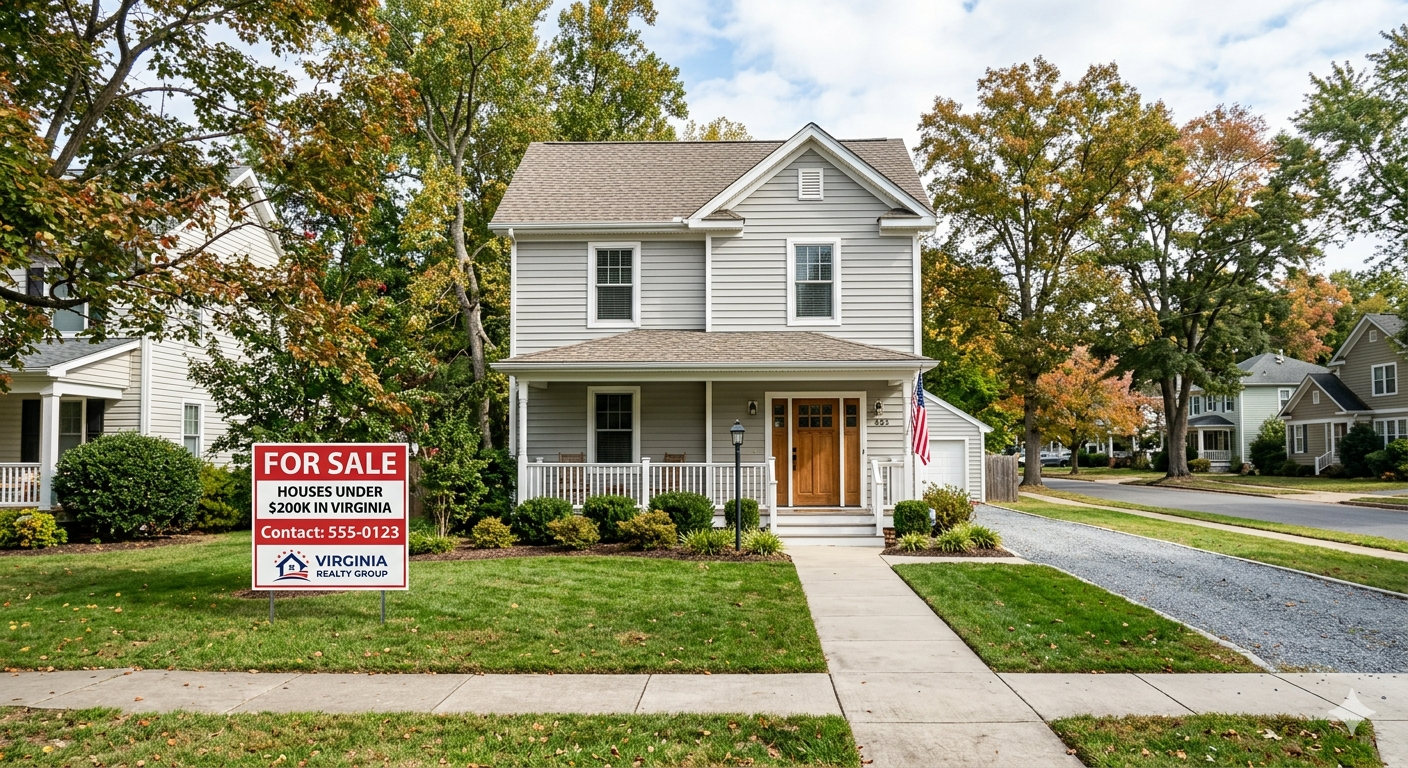
Do you have a budget under $200K and want to buy a home in Virginia? Many buyers ask this before starting their search. Options are limited in high-demand areas, so location matters a lot. You also need to act fast when good listings appear.
This guide explains where you can find homes under $200K in Virginia. You will learn which cities offer better value and what property types to expect. You will also understand key costs and smart buying steps. This helps you search with clear direction and realistic expectations.
Other Virginia markets:
These real estate platforms list houses for sale in Virginia under $200K. Each one has updated filters to help you search fast. You can find condos, fixer-uppers and starter homes across the state.
Zillow: Set a $200,000 price ceiling on this platform. Then pick any Virginia city or county to see available inventory.
Redfin: You get detailed listing pages with price drop history here. Neighborhood data for budget buyers is also included.
Houzeo: A good selection of Virginia listings under $300K is available here. Use the sub-filters to narrow your search below $200K.
Homes.com: This platform covers smaller Virginia markets well. You can search Woodbridge, Manassas and Stafford using the price-max filter.
Realtor.com: Full MLS access is available across all Virginia counties here. Rural areas with more affordable options are also listed.
Check these sites often. Listings under $200K attract multiple offers within hours of going live.
Buyers shopping under $200K should understand what is realistic in today’s housing market. Properties in this range may come with trade-offs, especially in more desirable areas.
Typical features may include:
One cause is stiff competition since homes become attractive to both first-time buyers and investors. Well-priced listings in this market receive multiple offers almost immediately; being prepared is of utmost importance.
When looking to buy a home in the under-$200K range, buyers should consider the entire cost of ownership as opposed to just price.
HOA is not applicable. If buying a condo, be sure to read the HOA rules, fees, and financial health. Monthly homeowners’ association fees would greatly influence whether a home is affordable.
Fixer-uppers: Houses in their grey years may need a bit of work. Buyers have to put aside money for repairs, appliances, and the unexpected.
The majority of the time, renting is not only more costly in itself but also prohibits appreciation value over longer lengths of time, so home purchases tend to be a much better option. However, buyers should compare:
It helps them decide if owning meets their financial goals.
For those in the market to buy, there are also a handful of down payment assistance programs available in Virginia that can help first-time buyers minimize their upfront costs. They make homes more affordable, which means homebuying is easier to manage.
For this reason alone, a relatively cheap property can prove to be a great buy for many buyers. This can do more for you than renting, but still grants you stability, so a smaller home or condo might work in your favor when it comes time to build equity.
You have to adjust your expectations in the current environment. Long-term buyers who do not look for perfect properties usually have the most to gain. An entry-level property also opens the door for upgrading down the track as equity builds.
However, I have to plan the process and create a budget for buying a resale house with one year old at a lower price, a better way to buy today.
With a limited budget, searching for your home can be intimidating, but it’s worth it when you finally find your perfect place in the state of Virginia. Having an experienced agent who represents buyers on the other side of privileged status will help in spotting opportunities sooner and ensure less money is wasted.
With over 20 years of experience to guide buyers in the competitive Virginia housing market successfully. He shares actionable tools at each step of the purchase journey, from property search to closing.
Multilingual assistance is introduced for smoother communication and a better experience, with the help of Urdu and Punjabi, to be able to serve clients across different demographics.
Contact us today for help with your real estate questions and schedule a consultation.
Houses for sale under $200K in Virginia may not be impossible to find, but you have to be flexible and willing to pull the trigger and with the right coach by your side, you can do it. What is the best part of having a buyer: having reasonable expectations, understanding any spill in market conditions and budget, and planning well to get your hands on an investment property with good equity over time in today’s housing market.
Yes, but they are mostly found in smaller cities, rural areas, or as condos and fixer-uppers in select regions.
Cities like Roanoke, Danville, Martinsville, and parts of the Shenandoah Valley offer more options under $200K.
You’ll often find condos, small homes, or properties that may need some updates or repairs.
It can be, as homeownership helps build equity, but you should compare costs like maintenance, HOA fees, and utilities.
Get pre-approved, act quickly on listings, explore assistance programs, and work with a local real estate expert.